
Cryptocurrency is digital money. It is not printed or managed by a bank. It does not belong to any country. It exists online and runs on code instead of paper or signatures. You can send it to anyone in the world without asking permission or waiting for approval.
It might sound complex at first, but the main idea is simple. Crypto is money that works by itself. It is built to move freely and to be controlled by people, not banks or governments.
1. The core idea
Cryptocurrency is a digital form of cash that uses cryptography for protection. Every transaction is checked and recorded through math. No one can copy or fake it.
All transactions are stored in a public record called the blockchain. This record lives on thousands of computers. Everyone can see it, but no one can secretly change it. That makes the system open and secure.
You do not need a middleman to prove ownership. The network itself keeps everything in order.
2. How blockchain works
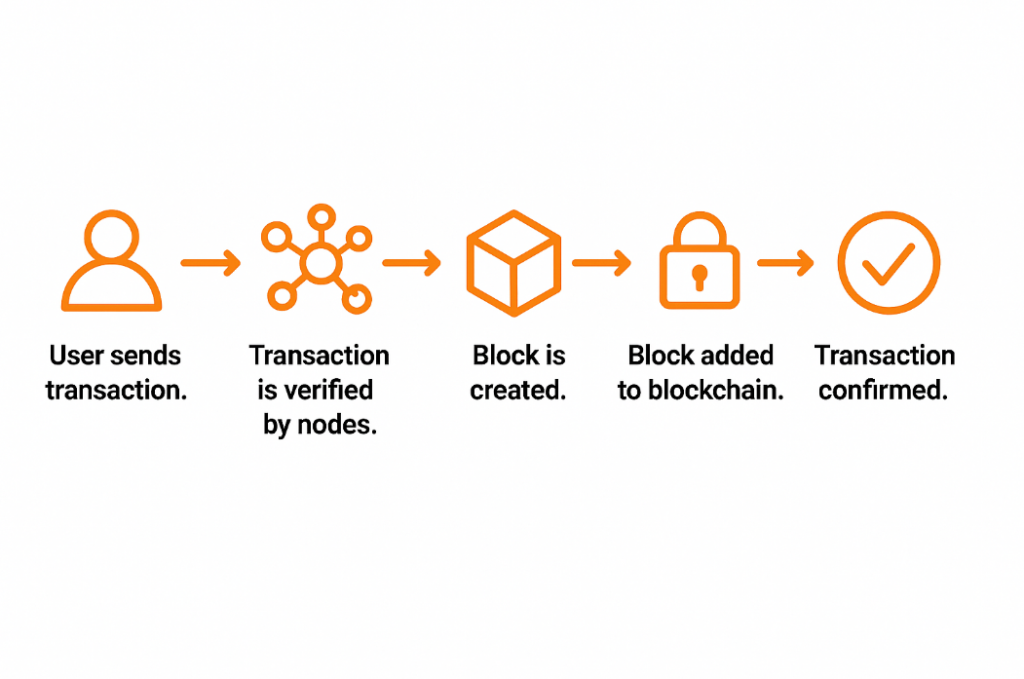
Imagine a notebook shared between thousands of people. When someone sends crypto, the action is added to this notebook.
Each page is a block. Every new block connects to the previous one, creating a chain.
Once a record is written, it stays forever. No one can erase or rewrite history. This design makes cheating nearly impossible.
Different cryptocurrencies use different ways to keep the system working.
Bitcoin uses mining, where computers solve math puzzles to confirm transactions. Whoever solves it first adds a new block and earns a reward.
Other networks like Ethereum use staking. People lock part of their coins to help the network stay safe and earn small rewards.
3. Why people use crypto
People use crypto for many reasons. Some treat it as an investment. Others use it for payments or to send money across borders.
Crypto works all day, every day. It does not depend on bank hours or holidays. For people in countries with unstable currencies, crypto can protect savings from inflation. For freelancers and remote workers, it allows fast global payments without big fees.
Developers also build new tools and products on top of blockchains. Apps, games, digital art, and financial services are part of this new space called DeFi and Web3.
4. What gives crypto value
Crypto has value for several reasons.
Scarcity matters. Bitcoin has a limit of 21 million coins. When the last one is mined, no more will appear.
Utility matters too. Ethereum and other platforms let people run applications and smart contracts.
Community is another key factor. A strong user base creates trust and stability.
Freedom is also part of the value. People can hold and move money without a bank.
Still, crypto is not backed by gold or the government. Its price depends on how much people believe in it. That belief changes fast, which is why crypto is volatile.
5. Benefits and risks
Benefits
Crypto gives control to the user. You decide what happens with your funds. Transfers are fast and often cheaper than bank transactions. Everything is transparent and recorded publicly.
Access is open to anyone with an internet connection. There are no forms to fill or permissions to ask.
Risks
Prices can rise or fall quickly. Losing a password or private key means losing your funds. There is no support line to call.
Scams are common. Some projects collect money and disappear.
Governments can change rules that affect how people use crypto.
The golden rule is simple. Never invest money you cannot afford to lose.
6. How to start safely
Start small and move carefully. You do not need a lot of money to learn.
Buy well-known coins like Bitcoin or Ethereum on a trusted exchange. Always enable two-factor authentication.
Then move your coins to your own wallet. There are two main types.
Hot wallets are online and easy to use but more exposed to hackers.
Cold wallets are hardware devices that stay offline and are safer for long-term storage.
Write down your recovery phrase and keep it somewhere safe. Do not store it online. Do not share it with anyone.
Test with small transfers before using large amounts.
Patience matters. Learn before you risk more.
7. Main types of cryptocurrencies
Bitcoin (BTC) is the first and the largest crypto by market cap. Many people see it as digital gold.
Ethereum (ETH) supports applications, not only payments.
Stablecoins such as USDT and USDC keep their value close to one US dollar. They are useful for trading or saving without volatility.
Altcoins are other projects that test new ideas in speed, privacy, or design. Some are promising, others are not.
Privacy coins such as Monero focus on keeping transactions hidden.
Choose coins that solve real problems and have active communities behind them.
8. Real-world impact
Crypto already changes how people handle money.
In countries with high inflation, people buy Bitcoin to protect their savings. Migrant workers send stablecoins home instead of using expensive money transfer services.
Artists use crypto to sell their work as NFTs without middlemen.
Startups raise funds through tokens instead of traditional investors.
Governments also react. Some explore their own digital currencies called CBDCs. Others regulate crypto exchanges to prevent fraud.
It is similar to how the early internet grew. Unstable, experimental, but full of new ideas.
9. Common questions
Is crypto legal?
In most places yes, but laws differ. Always check your country’s rules.
Do I need to understand the code?
No. You can use crypto with simple apps.
Can I lose money?
Yes. Prices move fast. Keep your keys private and be careful with unknown projects.
Can I earn with crypto?
Some people do, but many lose. Focus on learning first. Profits come with experience.
10. Final thoughts
Crypto is not a miracle and not a quick path to wealth. It is a tool that lets people control their money directly.
That freedom comes with responsibility. You are your own bank now.
Start with small steps. Learn how wallets and transactions work. Protect your recovery keys.
The more you understand, the safer you become.
Crypto is still young but already changing how people think about money, trust, and independence. Whether you plan to invest or just stay informed, it is worth knowing how it works.

